
2026 Chevy Traverse vs. Tahoe vs. Suburban
2026 THREE-ROW SUV COMPARISON / EAST HARTFORD CHEVROLET
Chevy Traverse vs. Tahoe vs. Suburban
Room for your people. Space for your plans. Compare three Chevrolet SUVs built for bigger days.
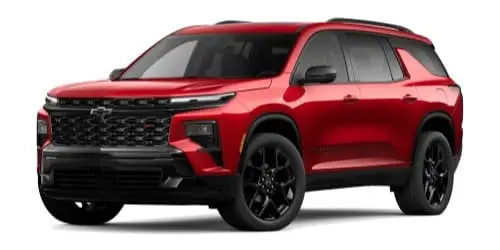
Three-row everyday versatility
Traverse
Start here for family seating, flexible storage and a midsize SUV driving experience.
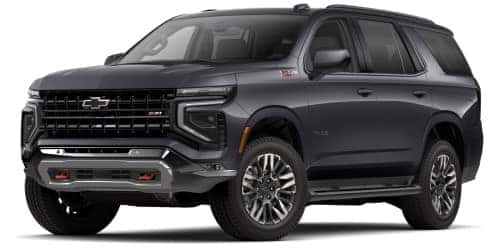
Full-size capability
Tahoe
Start here when a higher available towing limit is a priority and you want less length than Suburban.
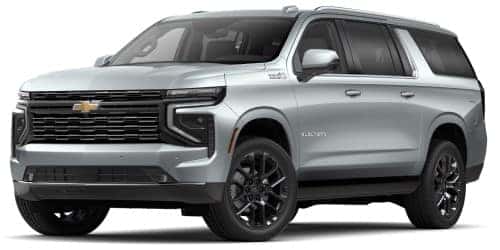
Maximum room for your plans
Suburban
Start here when carrying passengers and their luggage is a regular part of your routine.
Comparison covers 2026 U.S. models. Images are illustrative and may show another model year or optional equipment. Inventory links may include other years. Seating and towing figures require the appropriate configuration.
2026 Traverse, Tahoe and Suburban at a glance
Chevrolet Traverse
- Seating across three rows
- 7; up to 8 on LT with available second-row bench
- Engine choices
- 2.5L turbo
- Maximum cargo, second and third rows folded
- 98 cu. ft.
- Maximum available towing, properly equipped
- Up to 5,000 lbs.
- Diagonal center touchscreen
- 17.7-inch
Chevrolet Tahoe
- Seating across three rows
- 7, 8 or up to 9, depending on configuration
- Engine choices
- 5.3L V8, available 6.2L V8 or available 3.0L turbo-diesel; varies by trim
- Maximum cargo, second and third rows folded
- 122.7 cu. ft.
- Maximum available towing, properly equipped
- Up to 8,400 lbs.
- Diagonal center touchscreen
- 17.7-inch
Chevrolet Suburban
- Seating across three rows
- 7, 8 or up to 9, depending on configuration
- Engine choices
- 5.3L V8, available 6.2L V8 or available 3.0L turbo-diesel; varies by trim
- Maximum cargo, second and third rows folded
- 144.5 cu. ft.
- Maximum available towing, properly equipped
- Up to 8,200 lbs.
- Diagonal center touchscreen
- 17.7-inch
Maximum towing is not the rating of every vehicle. Engine, drivetrain, equipment, passengers, cargo and accessories affect capability. Cargo capacity is limited by weight and distribution. Maximum seating and maximum cargo volume cannot be used at the same time. Confirm the specific vehicle’s window sticker, labels and Owner’s Manual.
Which three-row Chevrolet SUV fits your needs?
Traverse vs. Tahoe
Traverse offers a midsize three-row option, while Tahoe moves into Chevrolet’s full-size SUV lineup. Tahoe’s published maximum cargo volume and maximum available towing rating are higher. That does not automatically make Tahoe the right choice for every family: the useful question is whether your actual load and travel plans call for those capabilities.
Our take: begin with Traverse if the main job is getting your household through school runs, errands and weekend visits. Compare Tahoe when you have a trailer to account for or want more maximum cargo capacity. Bring your passenger count and a list of what you carry so you can evaluate both with the seats positioned for your real routine, rather than choosing from the largest number on the page.
Tahoe vs. Suburban
Suburban gives you more maximum cargo space than Tahoe and measures 226.3 inches long versus Tahoe’s 211.3 inches. That is a 15-inch difference to consider in your garage, driveway and parking routine. Both offer multiple seating configurations and V8 or available turbo-diesel engine choices, depending on trim.
Our take: put Suburban first when you regularly take a full group and its luggage on the road. Keep Tahoe on the shortlist if its load space handles your gear and you prefer the shorter vehicle. Do a real loading check rather than assuming either will fit every stroller, suitcase or sports bag. Suburban’s extra room does not mean it has the higher tow rating; Tahoe has the higher published maximum of these two.
Traverse vs. Suburban
This comparison is about how much SUV you need on ordinary days as well as your busiest ones. Suburban has substantially greater maximum cargo capacity and a higher available tow rating. Traverse offers three rows without moving into the same full-size category.
Our take: choose the first test drive based on how often the third row and luggage area are both in use. A family that needs extra seats occasionally may evaluate space differently from one that loads every row for frequent trips. Try entering the third row, putting bags behind it and parking each vehicle before deciding whether Suburban’s additional capacity earns a place in your daily routine.
Compare towing for your actual trailer
The 2026 Traverse is rated for up to 5,000 pounds, Tahoe for up to 8,400 pounds and Suburban for up to 8,200 pounds when properly equipped. These published maximums are a starting point, not permission to attach any trailer below the headline number to any vehicle in the lineup.
Bring the whole towing picture
Before choosing a vehicle for a camper, boat or utility trailer, bring the trailer’s specifications and its expected loaded weight. Include what normally travels inside the SUV, too. Our team can help review the vehicle’s equipment and direct you to its ratings so you are comparing a particular SUV with a particular job.
- Loaded trailer weight: account for the trailer and what you will carry in it, not just an empty or advertised dry weight.
- Vehicle load: passengers, luggage, accessories and trailer tongue weight all matter when evaluating the vehicle’s limits.
- Installed equipment: confirm the towing configuration and the appropriate hitch, connections and braking equipment for the combination.
- Vehicle-specific ratings: follow the labels, Owner’s Manual and applicable trailering instructions. Do not assume a trim badge establishes capacity.
For detailed loading and towing responsibilities, review the 2026 Tahoe and Suburban Owner’s Manual. Use the correct manual for your model and year.
Seating, cargo and everyday family life
Count seats before comparing trim levels
A model’s advertised maximum seating is not the seating capacity of every vehicle for sale. Traverse offers eight-passenger seating on LT with the available second-row bench; other configurations seat seven. Tahoe and Suburban can be configured for seven, eight or up to nine. Ask to see the exact seat layout in the vehicle you are considering before deciding that a model meets your passenger requirement.
Then think about access. Which passengers use the third row, and how often do they get in and out? If your household uses child restraints, check their fit and permitted seating positions according to both the restraint instructions and vehicle manual. Test the layout with the front seats adjusted for the people who normally drive.
Measure cargo with everyone aboard
A seats-folded cargo figure answers a moving-day question. It does not show how your family vacation will fit with every row occupied. Set the seats for your normal passenger count, then load or measure your regular equipment. Look at the liftgate opening, floor shape and where items can be secured, not just the total volume.
Bring your largest frequently used item, or its dimensions, to your visit. A stroller, mobility aid, cooler or bulky sports bag can quickly reveal which layout works. Leave room for passengers to enter and exit without rearranging the entire load each time you stop.
Check your garage and parking routine
Measure your garage opening and available depth before your test drive, leaving room for the door to close and people to move around the parked vehicle. Consider ceiling-mounted storage and liftgate clearance, too. During the drive, include a parking maneuver and a route similar to the roads you normally use around East Hartford, Manchester or Glastonbury.
Do not let one unusually large trip decide the entire purchase without considering the other days of the year. At the same time, be honest about recurring needs: weekly carpools or regular towing deserve more weight in the decision than a task you rarely perform.
Try the controls, not just the screen
All three feature a 17.7-inch diagonal center touchscreen. Spend a few minutes parked to adjust your seat, locate climate controls and try compatible phone features. Review the equipment on the individual vehicle and ask about any connected-service plan requirements. A feature list is most useful when it matches the things you and your passengers will use.
Plan a useful comparison visit
- Bring your passenger requirements. Tell us the number of seats you need every day and on occasional trips.
- Bring your cargo measurements. Include your largest everyday item and the luggage you normally carry.
- Bring trailer details if you tow. Review the expected loaded trailer and vehicle load before narrowing your options.
- Compare actual vehicles. Match seating, engine, equipment and condition rather than relying on model names alone.
- Review your next steps. Ask for itemized pricing and bring your current vehicle for an in-store appraisal if you are considering a trade.
Shopping pre-owned? Equipment and ratings can change between model years. Review the exact listing and window sticker rather than applying this 2026 chart to an older SUV. Browse our pre-owned vehicles or read our lease vs. buy guide before discussing a vehicle-specific quote.
Traverse vs. Tahoe vs. Suburban FAQs
Which has the most maximum cargo space?
Suburban leads these 2026 models at 144.5 cubic feet, followed by Tahoe at 122.7 and Traverse at 98. Those figures require the second and third rows to be folded. Compare your actual luggage with the seats you need left in place.
Which has the highest available towing rating?
Tahoe has the highest published maximum in this comparison at 8,400 pounds, followed by Suburban at 8,200 and Traverse at 5,000. Each figure requires the appropriate equipment and loading conditions; verify the specific vehicle’s rating.
Can every Tahoe or Suburban seat nine?
No. Nine-passenger seating requires a specific configuration. Other layouts seat seven or eight. Confirm the actual seats in the vehicle you are shopping.
Is Suburban longer than Tahoe?
Yes. Chevrolet lists the 2026 Suburban at 226.3 inches and Tahoe at 211.3 inches. Suburban is 15 inches longer, so include garage and parking clearance in your comparison.
Should I start with Traverse or a full-size SUV?
Our suggestion is to start with Traverse when your main need is everyday three-row seating. Compare Tahoe and Suburban when your cargo or towing requirements call for more capacity. The best fit depends on your actual passengers, loads and preferred driving experience.
Can I compare these models at East Hartford Chevrolet?
Call us to confirm which vehicles are currently available and arrange a visit. We can review seating, equipment, pricing and trade-in options. All three models or your preferred trims may not be available at the same time.
Shop three-row Chevrolet SUVs near Hartford, CT
East Hartford Chevrolet is located at 585 Connecticut Boulevard, East Hartford, CT 06108. Whether your next SUV is for a Hartford commute, family trips from South Windsor or weekends away from Manchester, start with your priorities and compare the vehicles that meet them.
Need a smaller SUV instead? Compare the Chevrolet Trax, Trailblazer and Equinox.
Model information and sources
2026 U.S. model information reviewed September 9, 2026. Manufacturer references: 2026 Chevrolet Traverse, Chevrolet Tahoe and Chevrolet Suburban. Manufacturer pages may advance to another model year. Specifications, equipment and availability can change. Confirm the vehicle’s seating, installed options and ratings before purchasing or towing.